
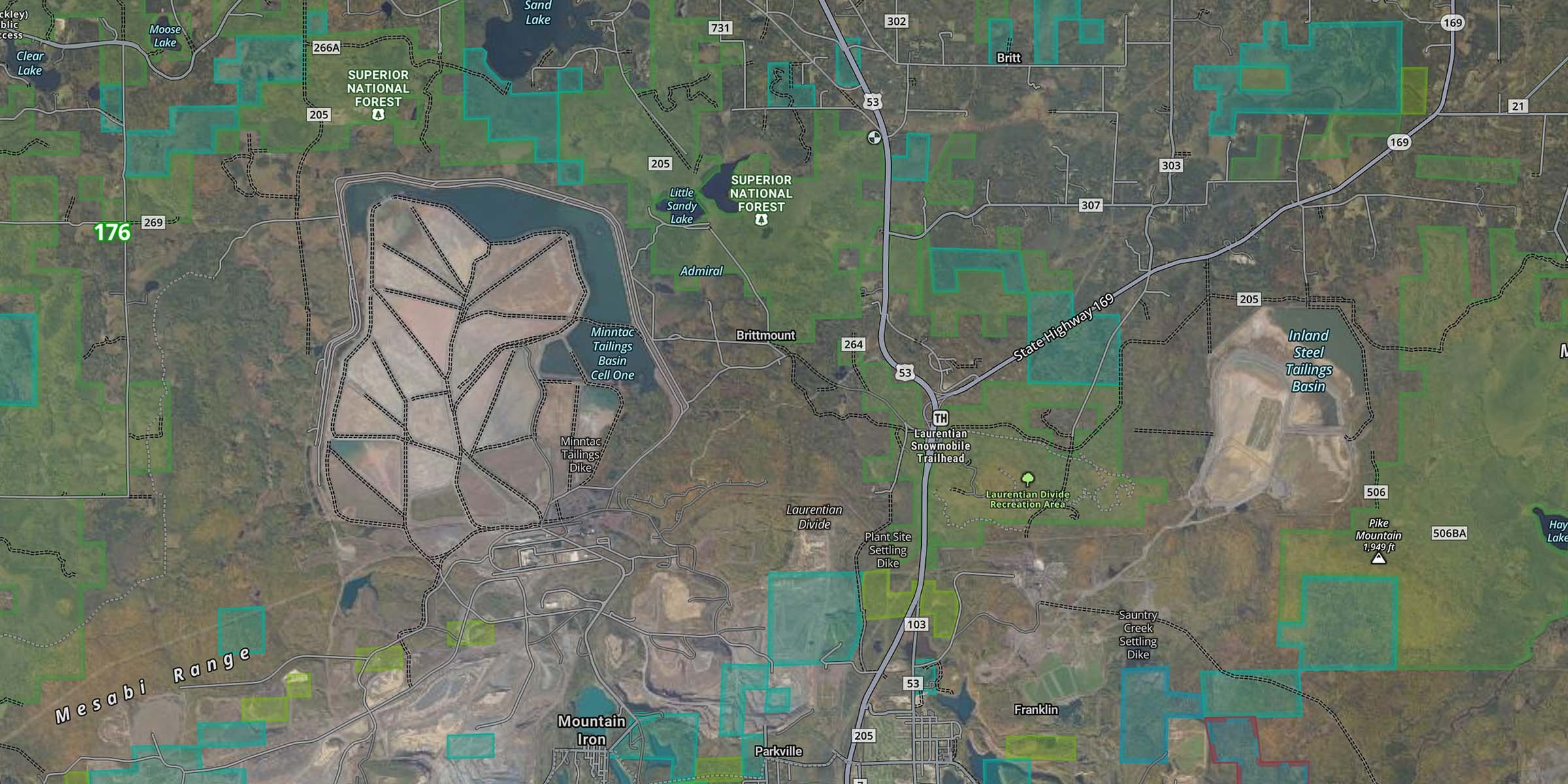
Stand with Tribes in 1854 Treaty Territory ~ Your voice is needed in the Minntac public comment!
"We are co-stewards of the resources, and the State has a statutory duty to consult us when its decisions affect our harvesting rights. The State has the regulatory authority to ensure no one is above the law. Manoomin (wild rice) is in crisis and disappearing from our waters because of decades of pollution that the regulators are allowing. What do our treaty rights mean to us if we can’t eat the fish and the manoomin is gone? "
~April McCormick–Grand Portage Secretary-Treasurer ~
Submit a Public Comment on the Draft Water Pollution Permit for Minntac Tailings Basin
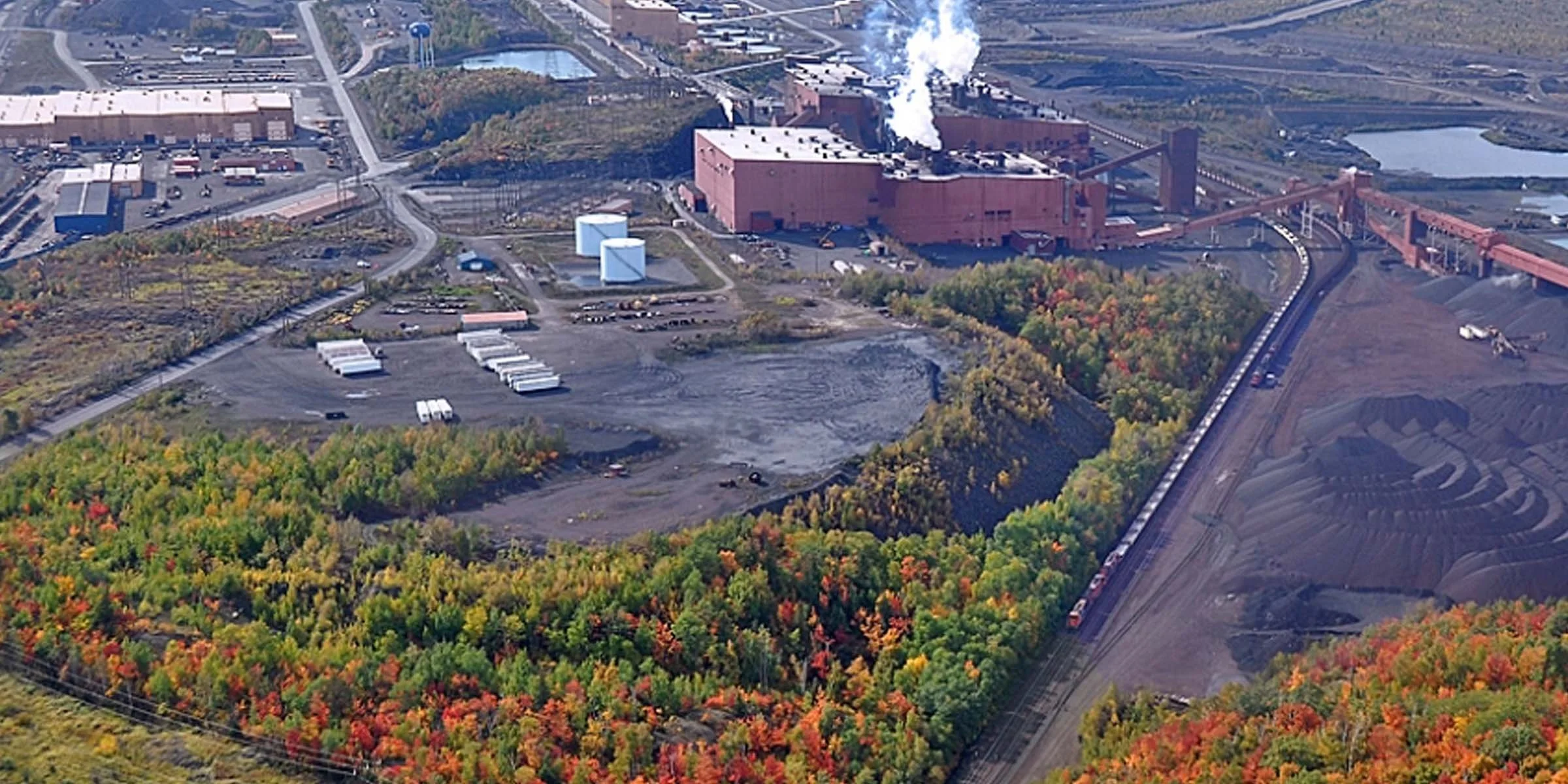
Minnesota’s Pollution Control Agency (MPCA) is considering allowing 45 more years for Minntac to reach the sulfate standard. Let's tell MPCA to begin to uphold the sulfate standard now! Please stand with the tribes and call on the MPCA to uphold the sulfate standard and protect water and wild rice for current and future generations.
Scroll down for additional resources about the comment period, a sample comment, notable press coverage and action alerts from partner organizations.
Sample Comment
I write to oppose the proposed Minntac wastewater permit that would allow up to 45 more years to meet Minnesota's sulfate limits. The Minnesota Pollution Control Agency is accountable to the people, treaties, and waters of the state and not corporate profits. I call on the state to work to uphold the sulfate standard now and not in 45 years!
Our state passed the sulfate limits in 1973. 45 years later, in 2018, this agency gave Minntac 7 years to clean up its groundwater mess-- a timeline that Minnesota courts upheld. There is no reason to give an international corporation 45 more years to stop polluting Minnesotans' groundwater and meet standards that are already over 50 years old.
This is especially important because, while Minnesota has no legal obligation at all to international corporations, it has a constitutional obligation under the Supremacy Clause to respect the 1854 Treaty with the Chippewa, 10 Stats. 1109, as the "supreme law of the land." U.S. Const. art. VI, cl. 2. Minntac operates within the 1854 Treaty territory, and the Supreme Court of the United States has held that the usufructuary rights that Ojibwe bands bargained to retain in their 1837 Treaty—including the United States's promise that the "privilege of... gathering the wild rice, upon the lands, the rivers, and the lakes... is guaranteed"—extend throughout the 1854 Treaty territory and may not be abrogated by Minnesota. Minnesota v. Mille Lacs Band of Chippewa Indians, 526 U.S. 172 (1999); Treaty with the Chippewa, 7 Stat. 536 (1837).
Although wild rice once covered the state, today it only grows on 64,000 acres in Minnesota—and then only “when conditions are favorable.” Legislative Report (Jan. 18, 2024) at 8. The quality of the plant itself is “being degraded and diminished.” Id. at 9. But the plant is not dying of its own accord. The State of Minnesota is actively killing wild rice. Because the plant cannot thrive in polluted waters—especially waters polluted by sulfate—Minnesota’s pollution-permitting decisions directly impair the treaty-protected rights of the Anishinaabe people in Minnesota. I am a person who believes in keeping promises—especially the promises that the U.S. made to secure the very territory that became Minnesota.
Rather than uphold these promises and control pollution, the Minnesota Pollution Control Agency proposes a perpetual-pollution permit that would carry Minntac’s violation of Minnesota law past the useful life of the plant. That is, it would never require Minntac to follow the law that is already two generations old. The people of Minnesota deserve better. Our Pollution Control Agency should serve our population and keep the U.S. treaty promises that secured the very land that Minntac pollutes by requiring Minntac’s immediate compliance with the legislated sulfate standard, and conducting a Generic Environmental Impact Statement to examine the cumulative effects of extraction across the treaty ceded territories.
Additional Resources & Notable Press Coverage
In response to the proposed 45-year extended compliance timeline, on September 23, 2026 Bois Fort and Grand Portage issued a media release calling on Minnesota’s Environmental Quality Board to conduct a full General Environmental Impact Statement across the entire 1854 Treaty Territory to understand the cumulative impacts of extractive industry on the region before issuing any new permits. Below are several extracts from the media release. You can read the full media release by clicking here.
“Pollution control should be part of the cost of doing business. Minnesota should be requiring investment in technology that reduces this pollution while the mine is operating and producing revenue — not writing a deadline that extends decades beyond when the mine closes.”
“The 1854 Treaty Authority resolution calls for the shortest reasonable, scientifically supportable treatment schedule, active treatment on both sides of the tailings basin, enforceable interim pollution-reduction milestones and adequate financial assurance if treatment obligations extend beyond the mine’s operating life.”
MPR News Coverage: “Two Ojibwe Tribes Say 45 Year Timeline for Minntac Pollution is too Long”
Here’s a quote from MPR News that explains the loss and harms from not upholding the sulfate standard:
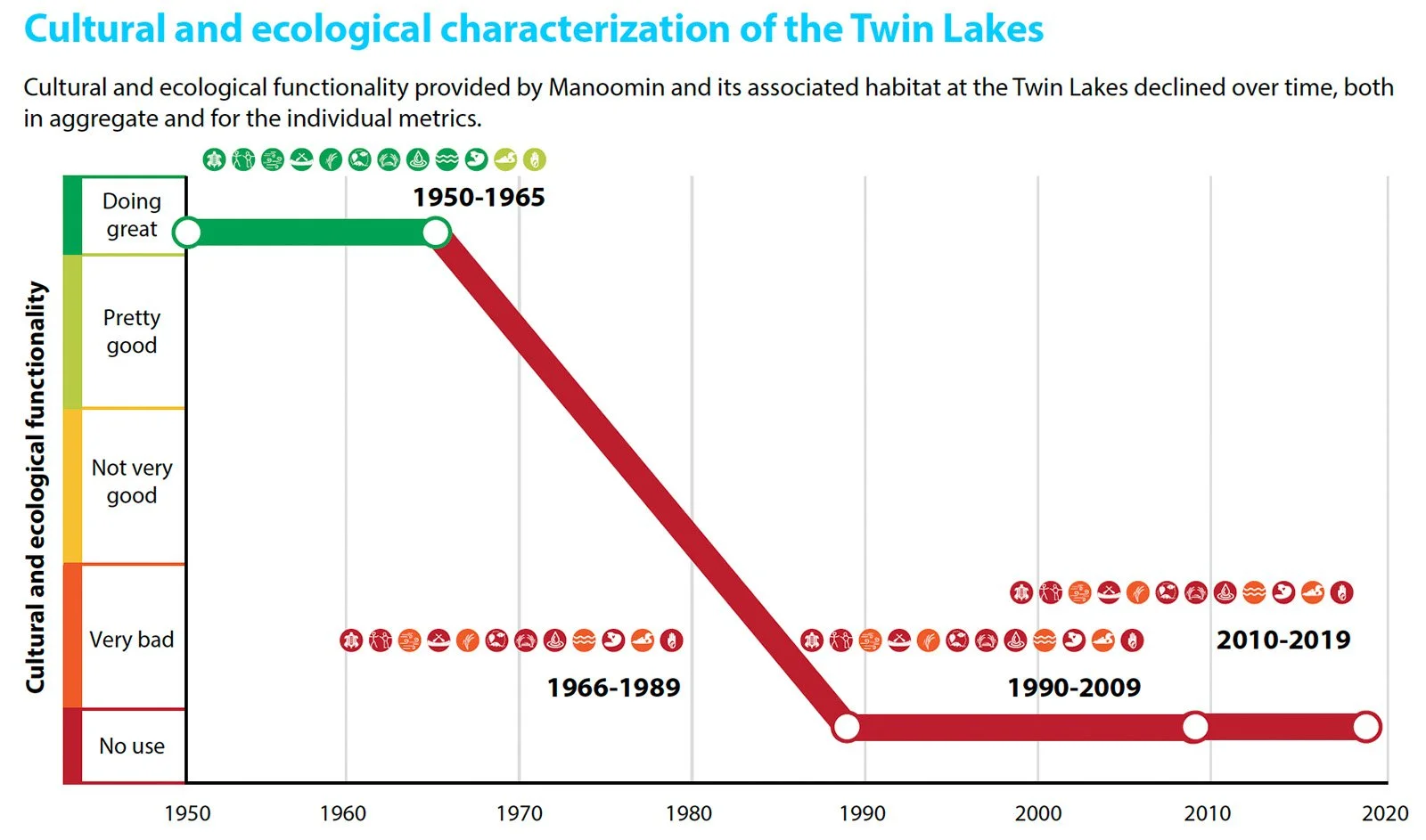
“In 1966, a state wildlife survey found wild rice growing thick on Little Sandy Lake, just north of Mountain Iron in the northeastern part of the state. Sandy and Little Sandy lakes could produce about 200 acres of rice in a good year.
The next year, U.S. Steel’s Minntac taconite operation opened nearby.
By 1987, state surveyors reported that wild rice was, “for all practical purposes,” gone from both lakes.
The 1854 Treaty Authority has surveyed Little Sandy regularly since 2006. In 2024, researchers found only two stalks of wild rice.”
Great Lakes Wild Rice Initiative Report: “Low ecological and cultural functionality characterized at the Twin Lakes”
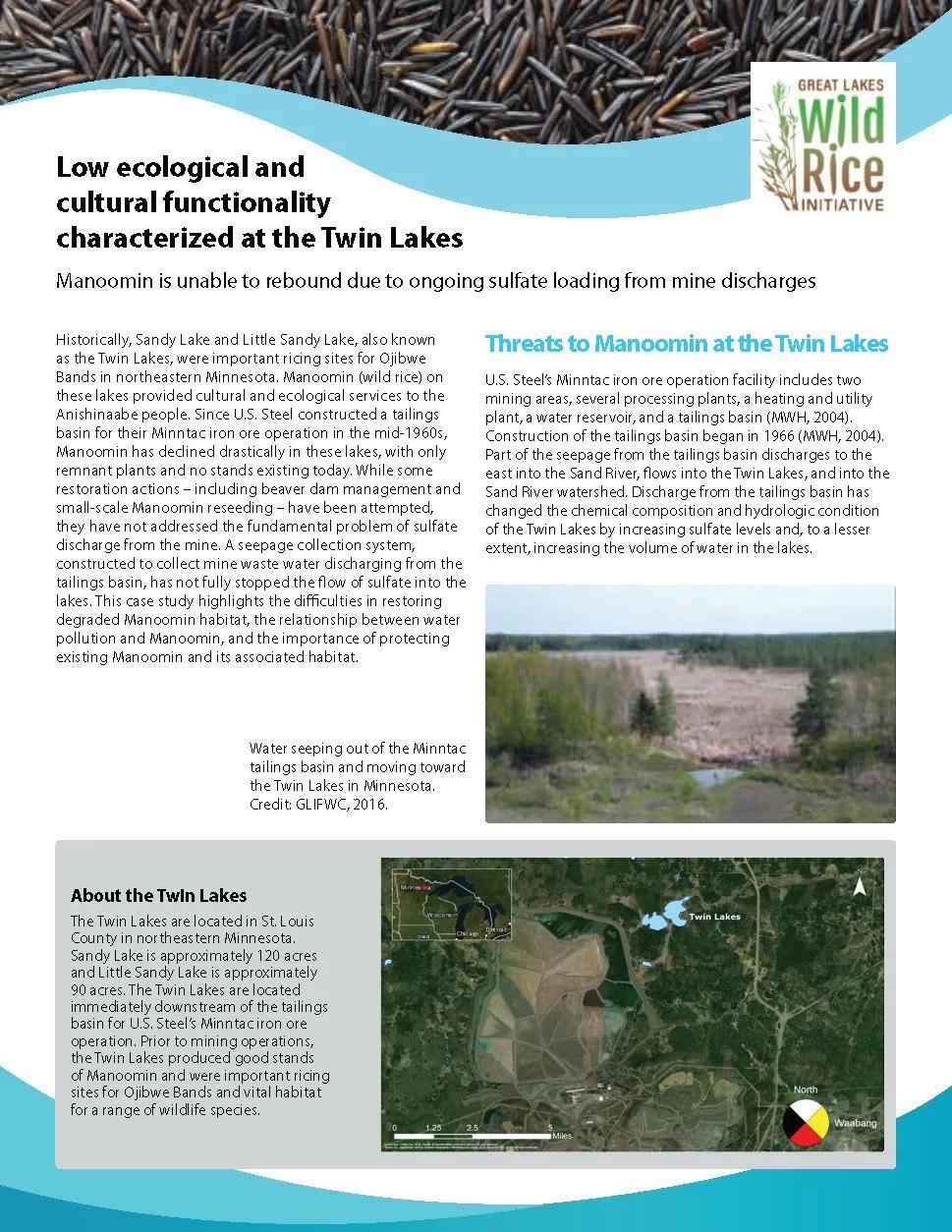
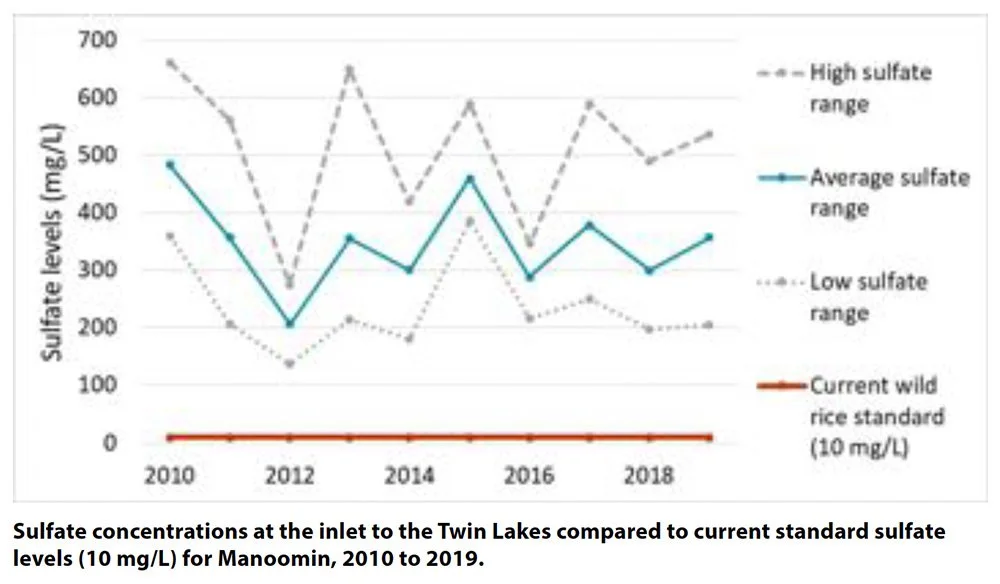
The 1854 Treaty Authority published a case study in 2020 examining the relationship between sulfate & wild rice in Sandy Lake and Little Sandy Lake, the “Twin Lakes”, located just east of the Minntac Tailings Basin within the 1854 Treaty Territory. Some notable graphs & illustrations are available below ~ read the full 6-page report by clicking here!
Action Alert from Water Legacy:
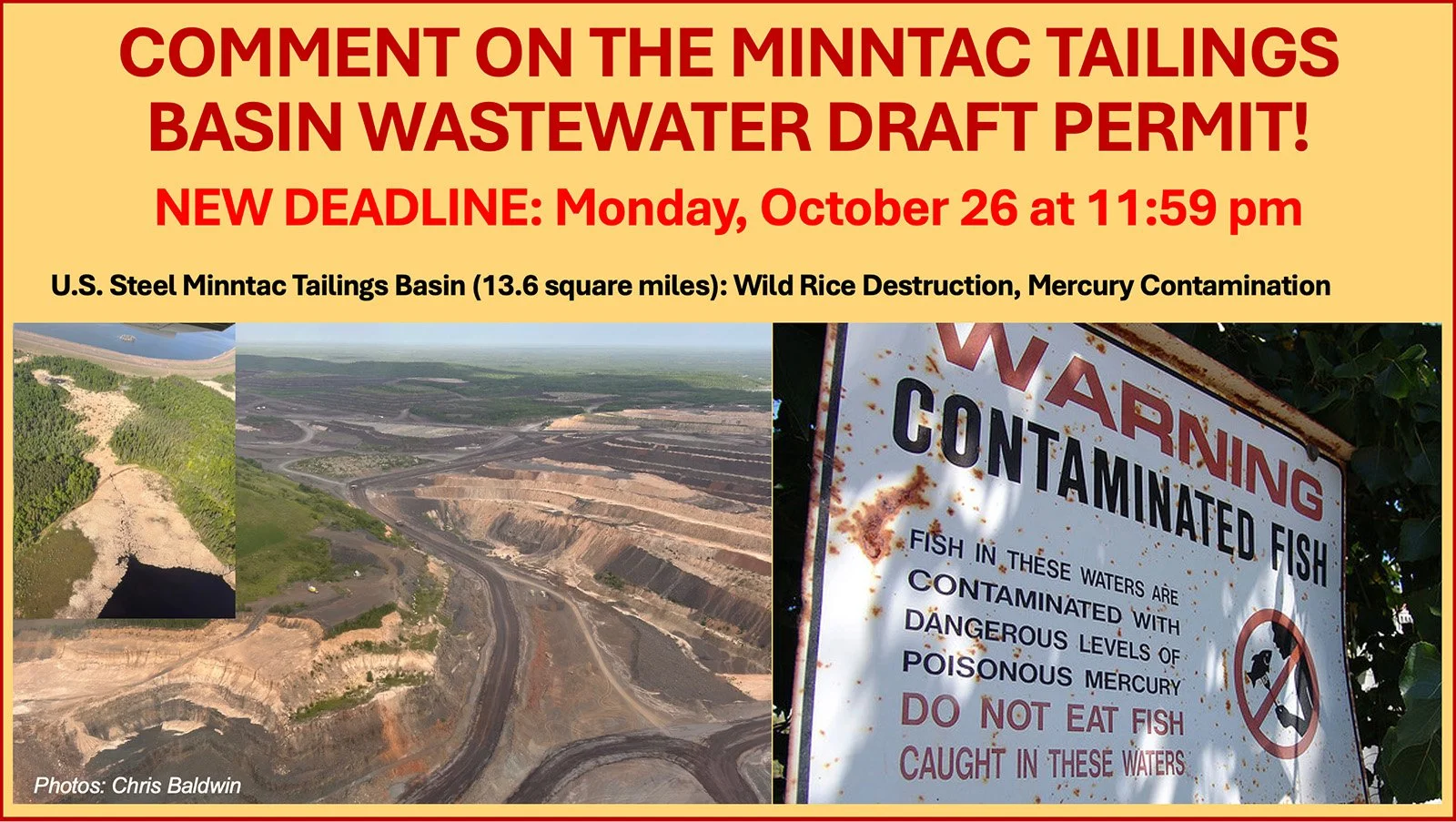
COMMENT by Monday, Oct. 26 to Demand that the MPCA Require U.S. Steel to Clean Up Minntac Sulfate Pollution that Has Killed Wild Rice and Increased Toxic Mercury Contamination of Fish for More than Half a Century!