Thank you to everyone who participated in the 2026 precinct caucus push! Given the response from our organizations & base, we have strong confidence that ALL of the resolutions that were part of this toolkit will be moving forward: Please check back for updates as we aim to support folks moving through the process!
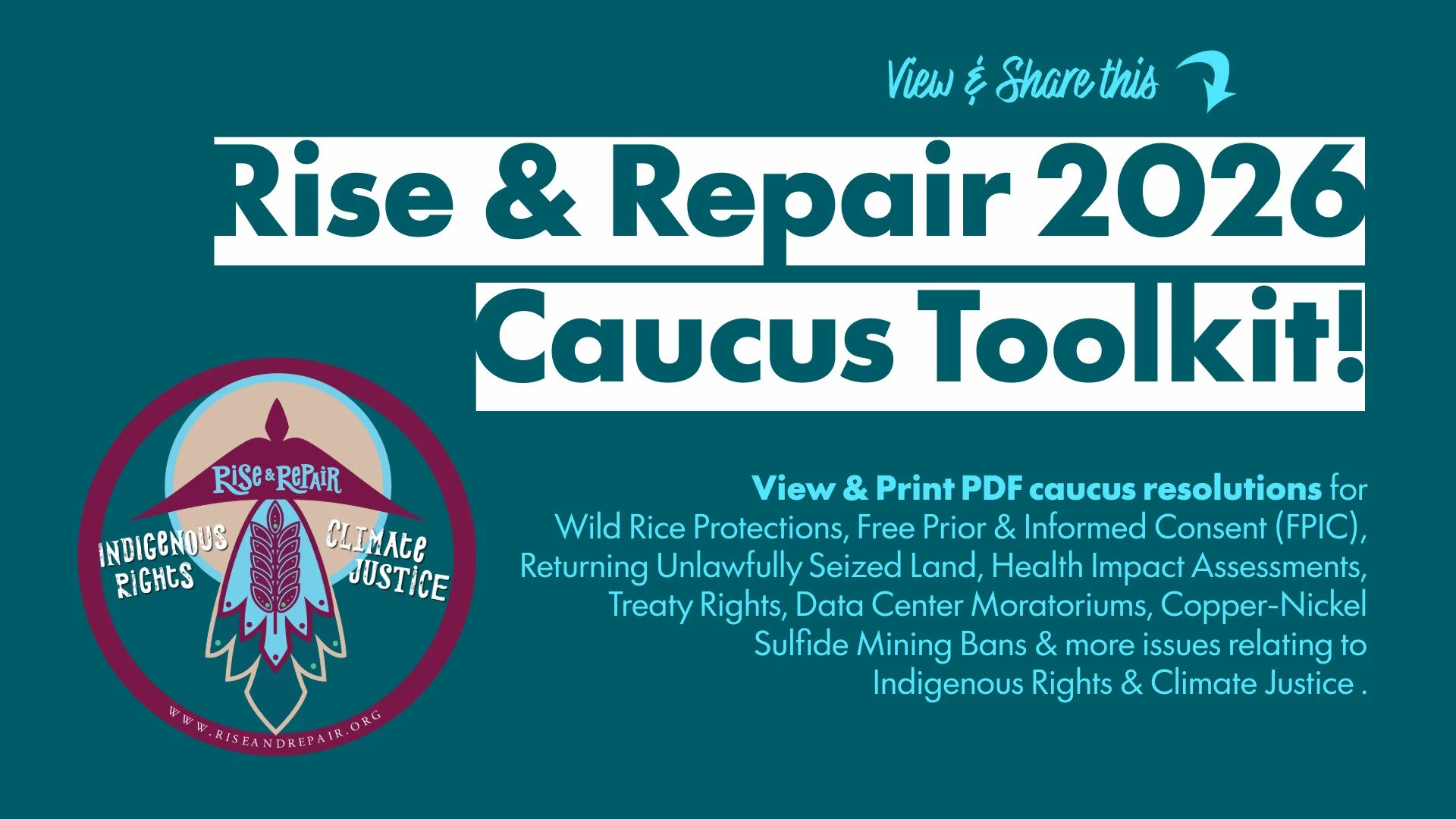
Resources on this page:
Additional Caucus Resources (Webinar Recording, Slide Deck, Blank Resolution Forms, Precinct Finder, How to Caucus)
Download & Print Our 2026 Caucus Resolutions!
We have compiled printable PDFs for both DFL & GOP that you can bring with to your precinct caucuses on February 3rd. Click below to download the full, combined packet of resolutions.
Individual Caucus Resolutions
Each of the topics listed below has printable PDFs for DFL & GOP precinct caucuses in our downloadable toolkit above. Generally, resolutions have a TITLE (5 words or less), a primary statement (in bold), and “supporting facts” which are bulleted beneath each statement.
Manoomin/Psíŋ Protections (Wild Rice) ~ [DFL Form | GOP Form]
We recognize that Manoomin/Psíŋ (Wild Rice) is sacred and inherently tied to the culture and health of Indigenous peoples in Minnesota. It is also critical to the health and identity of all Minnesotans, ecosystems, and lifestyles. This requires stronger protections from climate change, invasive species, pollution, and destructive development.
Wild Rice is a key indicator species to the health of our ecosystems and essential to supporting vibrant fish and waterfowl populations.
Manoomin/Psíŋ is central to tribal economies and plays a huge role in the state economy. Manoomin/Psiŋ is considered a “superfood” that requires no pesticides or fertilizers to grow! More than 17 species of wildlife are listed in the MNDNR’s Comprehensive Wildlife Conservation.
The Governor’s Wild Rice Task Force has shown a decreased abundance of Wild Rice in Minnesota. Some of the threats faced include climate change, invasive species, pollution, and sulfate byproducts from proposed mines like Polymet and Talon. Manoomin/Psíŋ, or wild rice, is no longer able to thrive in Southern Minnesota like it used to, and this is mainly due to human activities. Without legal protections, wild rice production will continue to decline.
Free, Prior & Informed Consent (FPIC) ~ [DFL Form | GOP Form]
We support Free, Prior and Informed Consent (FPIC) affirming that Tribal Nations retain the right to determine their development priorities and exercise self-determination in accordance with their cultural, social, economic, and political systems. FPIC requires that consent must be given voluntarily, without coercion, intimidation, or manipulation, and consent must be sought and at the earliest contemplation of a project, before any decision or action is taken and throughout the lifespan of the project when such action that may impact the rights, lands, resources, or livelihoods of Indigenous Peoples, and such consent must be based on accurate and accessible information provided in a language and format that is understandable and culturally appropriate to the intended audience with the consent being explicit, specific, and documented, reflecting the genuine agreement of the affected Indigenous Peoples, taking into account that such consent can be revoked at any time.
Free Prior and Informed Consent (FPIC) is an international human rights standard that affirms the inherent sovereignty and self determination of Indigenous Peoples, ensuring that no action affecting their lands, territories, resources, cultures or livelihoods proceeds without their freely given consent. Tribal Nations retain the inherent right to self-governance, control over their lands, resources, and cultural heritage, and the ability to make decisions that impact their homelands and treaty territories where Indigenous Peoples maintain the right to hunt, fish, and gather. FPIC must be obtained for all activities, projects, and initiatives that impact Indigenous Peoples' rights, lands, resources, and livelihoods.
Free, Prior and Informed Consent was adopted in 2007 as part of the United Nations Declaration on the Rights of Indigenous Peoples (UNDRIP) and the National Congress of American Indians (NCAI) adopted the principles of FPIC during the 2025 Convention.
Return Unlawfully Seized Public Lands ~ [DFL Form | GOP Form]
Supports returning unlawfully seized public lands to Indian tribes within the boundaries of Minnesota including (but not limited to) the return of the eastern half of Upper Red Lake & the Red Lake State Forest to the Red Lake Nation, the return of the White Earth State Forest to the White Earth Nation, and the return of the Cloquet Forestry Center and surrounding area to the Fond Du Lac Band of Lake Superior Chippewa.
In 1943, Minnesota designated approximately 155,000 acres within the White Earth Reservation as a State Forest under the management of the State violating Federal treaties. This land should be returned to tribal stewardship.
A federal 1889 “Chippewa Commission” unilaterally drew the Red Lake Reservation boundary through Upper Red Lake even though the Tribe did not agree to cede any portion of the lake to the U.S. or to Minnesota. Upper Red Lake’s eastern half should be returned to tribal stewardship in accordance with this understanding as understood by the Indians at this time.
In 1909, Minnesota established the Cloquet Forestry Center on 2,000 acres of land inside the Fond Du Lac Reservation in violation of Federal Trust Responsibilities. By 2003, the state expanded its in-reservation holdings to 3,400 acres. Return this land.
Indigenous Treaty Rights ~ [DFL Form | GOP Form]
Support the state of Minnesota upholding all of our treaties with Indigenous Minnesota tribes, including those involving manoomin (wild rice). These treaties are defined as the “supreme law of the land” under the U.S. Constitution. Failure to uphold treaties is considered a violation of human rights under international law.
From 1785 to 1867 the US signed more than 40 treaties with the Ojibwe people. In exchange for land and mineral rights, tribes retained hunting, fishing, and harvesting rights on the land that they had ceded. (Minnesota Historical Society)
Wild rice is sacred to Indian Tribes and is a core component of their cultural identity; …is essential for safeguarding Tribal food security and upholding Tribal treaty rights. (SF2077, not included in 2025 Environment Omnibus Bill)
Maintain the Existing Nuclear Moratorium ~ [DFL Form | GOP Form]
We support maintaining Minnesota Statutes, section 216B.243, subdivision 3b, which prohibits the Public Utilities Commission from issuing a certificate of need for new nuclear-powered electric generating plants because there is no permanent or safe solution for storing nuclear waste, it is too expensive, and takes too long to permit and build.
Nuclear reactors, waste sites, and uranium mines and enrichment facilities have historically been sited on or near tribal lands without informed consent, furthering the harm of the nuclear legacy.
After over fifty years of commercial reactor operation, there is still no long-term storage solution for radioactive nuclear waste and new nuclear infrastructure would ensure decades of continued waste production with 95,000 metric tons currently in the U.S., costing billions of dollars.
Currently, each dry cask of waste in storage in Minnesota costs $500,000 a year. In 2025, Xcel applied for additional waste storage, estimating that the Prairie Island reactors alone would generate another 1,200 spent fuel assemblies requiring 34 additional DFS systems to run through 2053/54. This does not include waste that would be generated by running the Monticello nuclear reactor until 2050 nor waste that would be generated by any new nuclear infrastructure.
Protect Communities from Data Centers ~ [DFL Form | GOP Form]
We support a comprehensive statutory framework—up to and including a moratorium on the construction of new hyperscale data centers—to ensure that Minnesota’s energy, water, fiscal resources, communities, and democratic processes are protected before any such facilities may proceed; and that such a framework must require full public transparency and engagement, robust environmental review in the form of Environmental Impact Statements (EIS), clear siting standards, equitable economic policy, and enforceable guarantees that Minnesota’s climate and carbon-free energy goals, natural resources, and people—not corporations—determine the future of data center development in our state.
Hyperscale data centers impose significant local and global burdens, including increased noise, light pollution, massive electrical transmission expansions, and substantial electronic waste from equipment replaced every 2 to 5 years, amplifying impacts on nearby communities and the global mining footprint required to supply these facilities.
The primary beneficiaries of hyperscale data centers are the world’s wealthiest corporations and individuals, who capture the overwhelming economic gains from AI and related technologies while the public absorbs the environmental, social, and infrastructure costs, exacerbating inequality and concentrating technological and economic power in the hands of the top 1%.
Health Impact Assessments for EIS ~ [DFL Form | GOP Form]
We support requiring a Health Impact Assessment to understand how a proposed project will affect people’s health whenever an Environmental Impact Statement or Environmental Assessment Worksheet is required.
Any project large enough to harm the environment is also large enough to affect human health.
A Health Impact Assessment (HIA) is a way to study how a proposed project or development could affect people’s health, including physical health, mental health, food access, culture, and overall well-being—especially for Tribal Nations and communities that may be harmed the most as they are inherently connected to the lands and water through cultural traditions.
Projects requiring an Environmental Impact Statement (EIS) or Environmental Assessment Worksheet (EAW) can also harm the health, culture, and economic well-being of Tribal Nations and all Minnesotans, and including a Health Impact Assessment (HIA) alongside these reviews helps protect Treaty Rights and ensure Tribal knowledge is considered.
Ban Copper-Nickel Sulfide Mining ~ [DFL Form | GOP Form]
We recognize copper-nickel sulfide mining as an unacceptable risk to our communities and support a statewide ban on copper-nickel sulfide mining.
No sulfide mine has operated and closed without contaminating nearby lakes, rivers, or groundwater. Legislative research has shown that sulfide from mining harms the entire ecosystem.
Copper-Nickel sulfide mining brings metal-bearing rock and waste to the surface, where it can react with air and water. When sulfur-containing minerals are exposed this way, they can form sulfuric acid. This process can result in acid mine drainage, posing unacceptable risks to water, ecosystems, and the rights of all Minnesotans to clean water.
Stand Up for Minnesota’s Water ~ [DFL Form | GOP Form]
Support clean water and a policy that would protect Minnesota's many waters from the dangers of copper-sulfide mining and protect Minnesota from the foreign mining companies seeking to exploit and profit from our resources.
Whereas, According to the Environmental Protection Agency, copper-nickel sulfide mining is the most polluting industry in the U.S
Whereas, sulfide mining has a perfect track record of polluting surrounding water systems
Whereas, there has never been a nickel or copper mine in Minnesota, let alone at the headwaters of iconic waterstems such as the Boundary Waters, Lake Superior, and the Mississippi and St. Croix Rivers
Whereas, international mining conglomerates behind the proposed sulfide mines in Minnesota — Glencore, Teck, Antofagasta, and Rio Tinto — have long histories of violating environmental laws and mistreating both union and non-union workers that in 2024 the International Trade Union Confederation named Glencore (a parent company of proposed NewRange-PolyMet sulfide mines) as one of seven entities that undermine democracy and violate human and workers' rights.
Shut Down HERC Trash Burner ~ [DFL Form | GOP Form]
We will combat environmental racism by demanding that the Hennepin County Board keep its promise and shut down the HERC trash burner as it resolved to do on October 24, 2023. HERC must be shut down by 2027, in line with a resolution the City of Minneapolis passed on October 31, 2024.
HERC is the largest industrial source of air pollution in Hennepin County and one of the biggest greenhouse gas emitters in the state. The incinerator burns 350,000+ tons of trash annually from Minneapolis and suburbs across the county. It is located near Target Field between Downtown and North Minneapolis.
For 230,000 people living in adjacent neighborhoods -- largely made up of low-income folks and BIPOC residents - (Black, Indigenous and people of color) -- dirty air, chemical fumes, and the risk of poor health have become part of daily life. HERC's pollutants trigger asthma attacks, and contribute to heart attacks, strokes, cancers, birth defects, cognitive and behavioral impairments, and other harmful health outcomes.
Reducing Waste & Food Insecurity ~ [DFL Form | GOP Form]
Support eliminating organic material from landfills and incinerators across Minnesota and addressing food insecurity in our communities by prioritizing food waste reduction, supporting food rescue organizations, and expanding local composting programs that keep resources in the community, enrich our soil, and support environmental justice and public health.
WHEREAS: diverting food waste from landfills reduces methane emissions, a potent greenhouse gas, helping Minnesota meet climate goals; WHEREAS: food rescue programs can provide millions of meals annually to Minnesotans experiencing food insecurity;
WHEREAS: composting organic material locally improves soil health, water retention, and reduces the need for synthetic fertilizers;
WHEREAS: communities near landfills and incinerators often face disproportionate environmental and health impacts, making waste diversion an environmental justice priority; WHEREAS: investing in local composting and organics infrastructure creates jobs and supports Minnesota’s circular economy.
Packaged Food Testing for Phthalates ~ [DFL Form | GOP Form]
We support helping consumers avoid food with high levels of phthalates (harmful plastic chemicals that leach into packaged food products) by requiring companies to test their packaged food for phthalates, report results to the Minnesota Department of Agriculture, and post the results to their website so they are available to consumers.
Phthalates are endocrine disrupting chemicals (EDCs) that interfere with hormones in our bodies and are linked to many diseases like diabetes, obesity, autism, cancer, infertility, high blood pressure, high cholesterol and cardiovascular diseases. They are added to plastic to make it more flexible and durable, but these chemicals leach out and get into our food and drinks. They can get into food through packaging but also from exposure to plastic in tubing, conveyor belts, and gloves used during food processing. Phthalates can even enter directly into meat and produce via contaminated water and soil. A recent Consumer Reports investigation of supermarket staples found phthalates in almost every one of the 85 items tested.
Despite growing evidence of the potential health risks posed by phthalates, the tests found that these chemicals remain widespread in our food. Annie's Organic Cheesy Ravioli, made by General Mills, contained 53,579 nanograms of phthalates in a single serving, the highest level of any food item tested. Other General Mills products also had concerning levels of phthalates. Cheerios (10,980), Yoplait Low Fat Yogurt (10,948), Green Giant Cream Style Corn (7,603), Progresso Vegetable Classics Vegetable Soup (2,888).
Ban Single Use Plastics ~ [DFL Form | GOP Form]
We support phasing out unnecessary single-use plastics i.e. plastic utensils, bags, straws, food containers, condiment packets and packaging, that we use once and throwaway and support nontoxic reusable and sustainable alternatives to protect clean water and human health.
40% of plastic production is single use plastic. Plastics contribute $1.5 trillion in health care costs from diseases they are linked to. The fracking of natural gas to make plastic contributes to global warming and, if production increases as projected, will cause irreversible climate change.
Microplastics are everywhere in our environment because they never decompose. New research suggests that they can contribute to inflammatory reactions, cell damage and death, immune system compromise, intestinal, respiratory, cardiovascular and neurological diseases like strokes and heart attacks, dementia and infertility.
2400 of these added chemicals are considered harmful to us. The rest have not been tested. These chemicals are endocrine disruptors that interfere with our hormone systems. They are linked to diabetes, obesity, cancers. infertility, fetal damage, high cholesterol, high blood pressure, ADHD, autism, mental disturbances, learning disabilities, respiratory and cardiovascular diseases.
Oppose Inhumane Immigration Enforcement ~ [DFL Form | GOP Form]
We oppose inhumane policies and procedures of immigration enforcement because immigrants are people with rights to due process and human dignity, whose communities make Minnesota better, culturally, spiritually, and economically. Therefore, we oppose inhumane and unjust actions that threaten entire immigrant communities or deprive them of basic human rights, such as, when neighbors report on neighbors, or when local public safety officers help arrest neighbors who have caused no harm, or when good neighbors are detained in shared civic gathering spaces where we should all feel safe, such as houses of worship, schools, hospitals and clinics, or government offices.
As business owners, co-workers, teachers, students, doctors, nurses, health care aides, artists, cooks, food producers, hospitality and construction workers, and in many other fields, immigrants build, maintain, enrich, and care for Minnesota, statewide. They are 20% of childcare providers, 30% of agricultural workers and food producers, 40% of nursing aides who care for Minnesotans that are elderly or disabled. Most come to escape harsh conditions, seeking citizenship, but a broken immigration system makes that a long, hard, expensive process. We insist on a civil immigration system that is just, humane, and lawful, allowing due process and fair hearings, for every person in Minnesota.
Additional Caucus Resources
2026 Rise & Repair Issue Briefing Webinar Recording
Watch the recording from our Rise & Repair Alliance Caucus Issue Briefing Webinar hosted January 26th, 2026. Click the link below to watch the zoom recording, and enter the password when prompted:
Zoom Recording Link | Enter Password: cG%8n8HQ | View Slide Deck Used in the Webinar
Google Drive Resolutions Folder
This folder contains all of the individual caucus resolutions organized by topic. In each folder, there is a DFL & GOP resolution:
View Folder of Individual Resolutions by Topic
DFL Environmental Caucus Training Video
This recorded training by the DFL Environmental Caucus is extremely in-depth and provides everything you need to know about participating in the caucus process with the Democratic Farmer Labor Party in Minnesota
Find Your Local Precinct Caucus
Use this link to enter your address and find the location of your precinct caucus for Tuesday, Feb. 3, 2026
https://caucusfinder.sos.mn.gov/
Blank Caucus Resolution Forms for DFL & GOP
DFL Caucus Resolution Template | GOP Caucus Resolution Template
Alliance Partner Caucus Resource Pages
Click a logo below to view the caucus resource pages published by alliance partner organizations.