

Recognizing the Inherent Rights of Manoomin/Psíŋ (Wild Rice)
Protecting Manoomin/Psíŋ & Clean Water via Legislative Action in Minnesota
What is wild rice and why is it important?
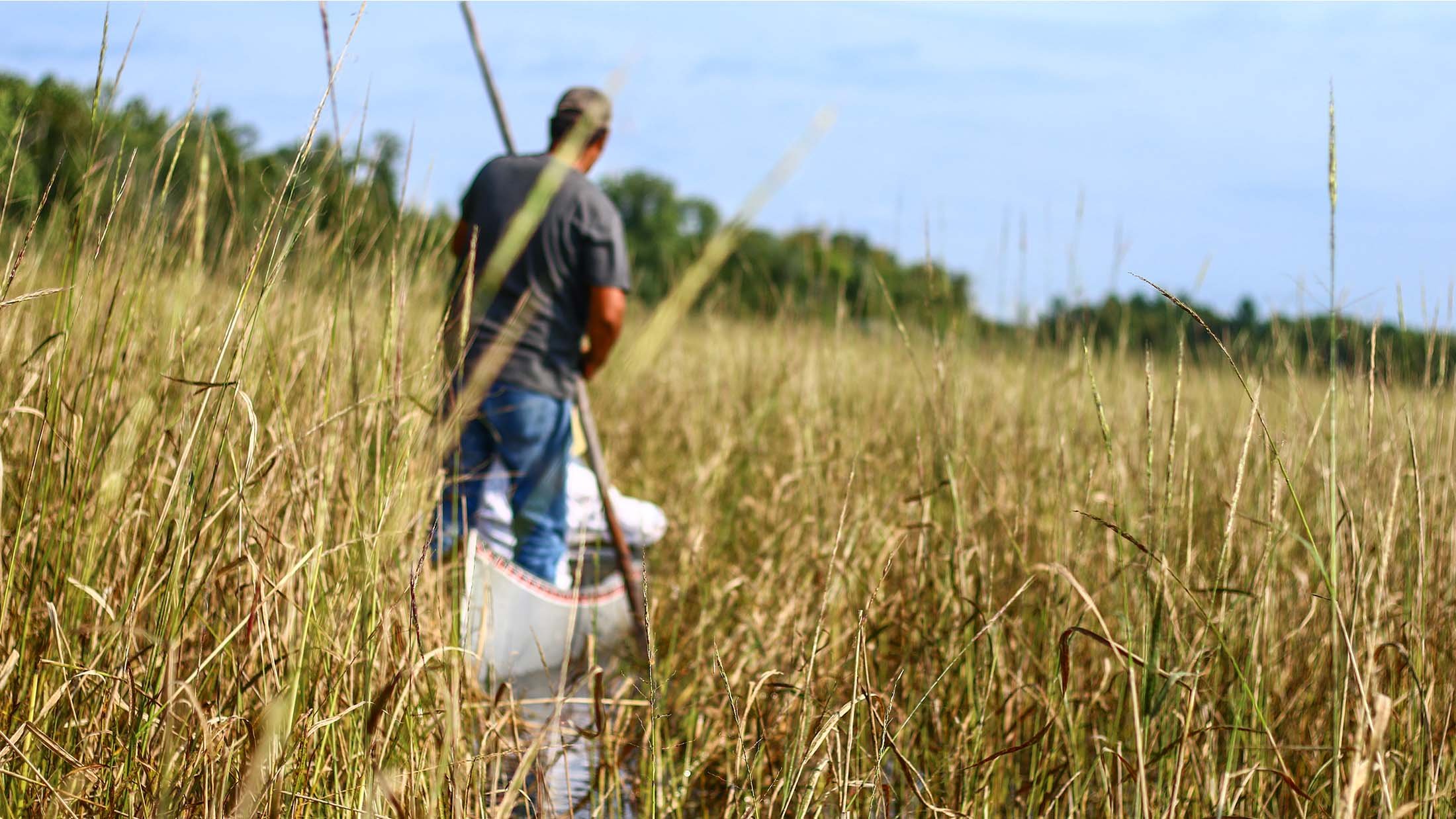
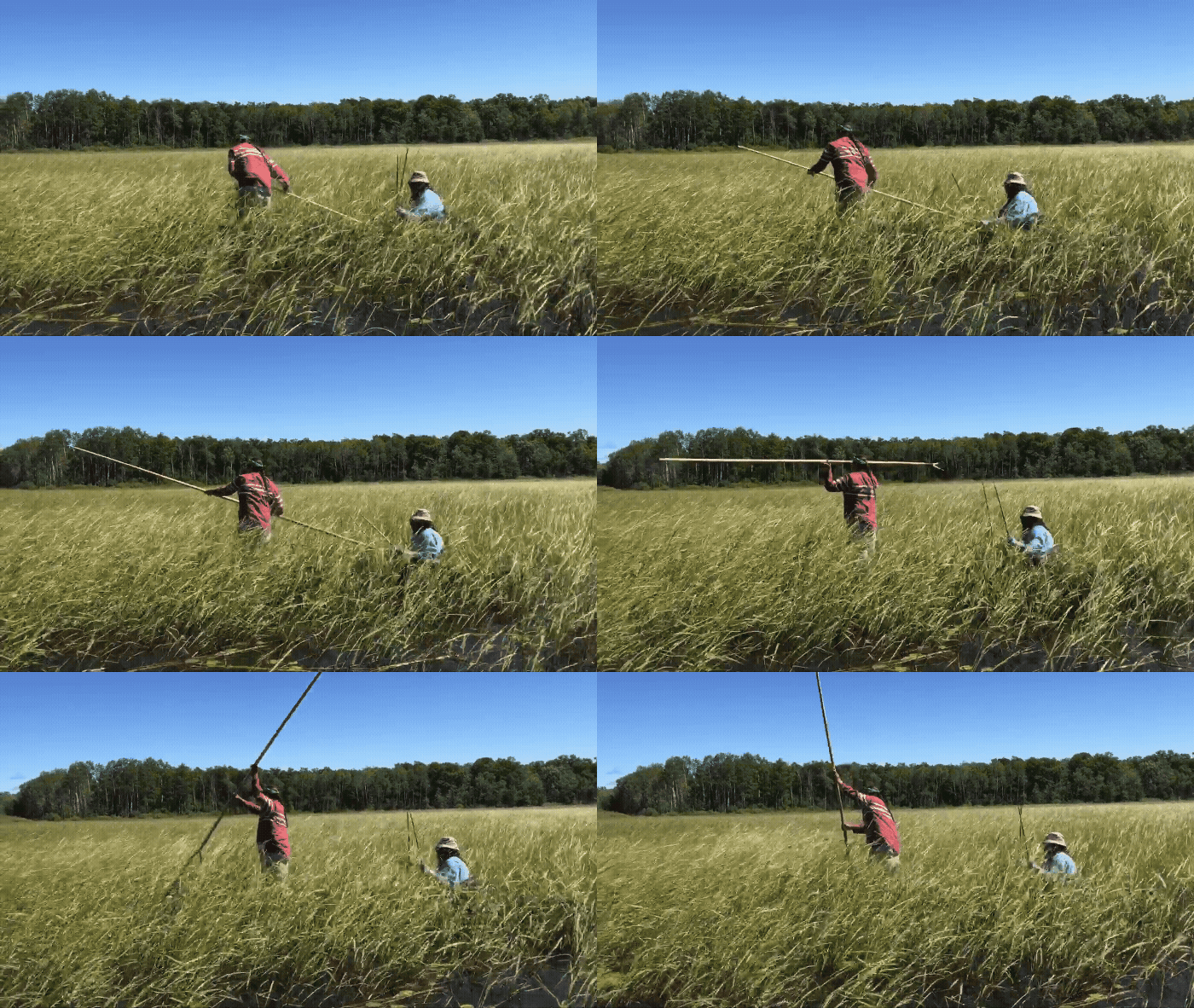
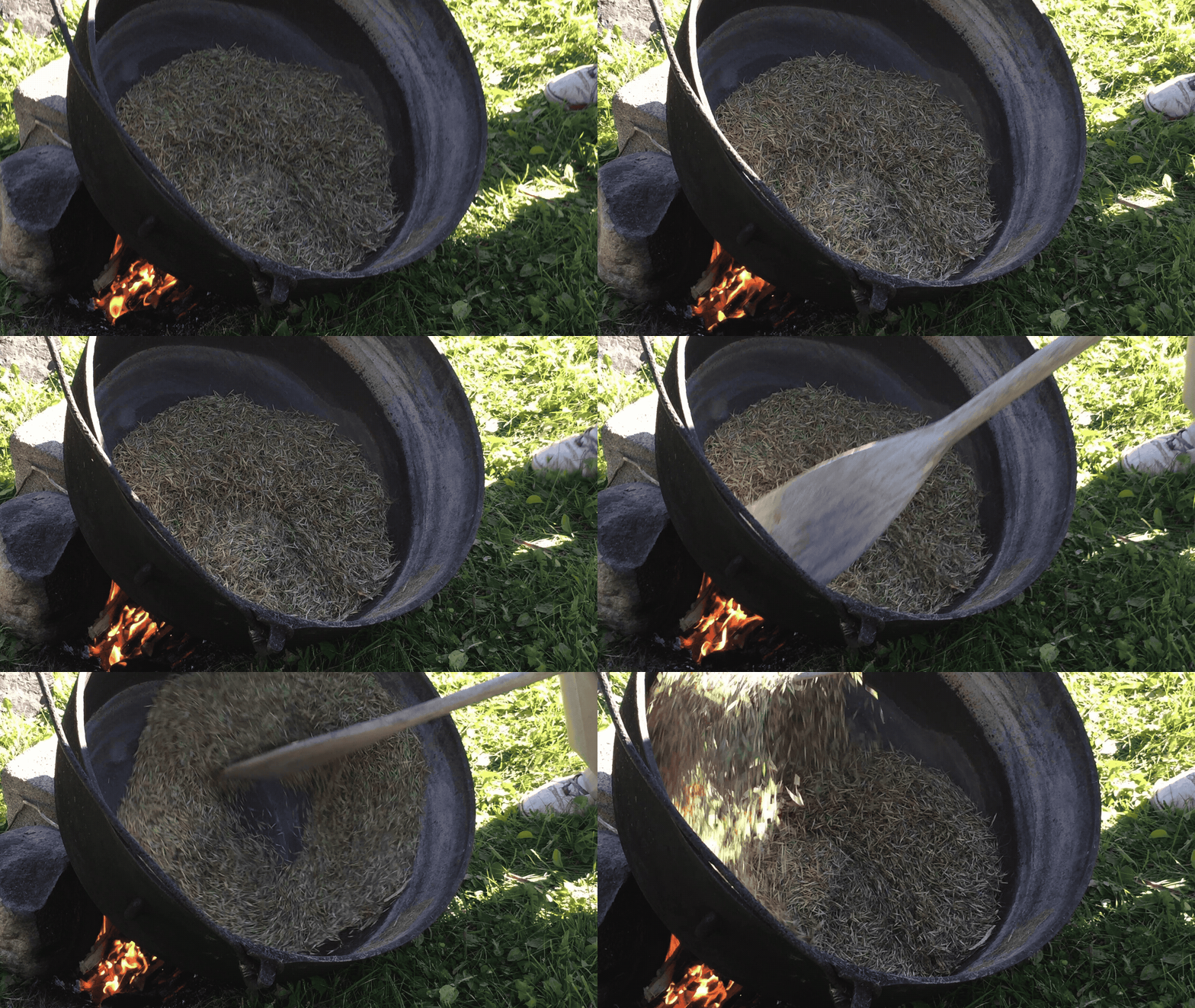
Known as manoomin to the Anishinaabeg and psíŋ to the Lakota and Dakota, wild rice is crucial to the health of people and ecosystems in Minnesota. Importantly, manoomin/psíŋ is central to Anishinaabeg and Dakota spirituality, culture, nutrition, and economy. As the state grain of Minnesota, wild rice is also core to the Minnesota economy and environment, not just because it’s an incredibly delicious source of nutrition that requires no fertilizers to grow, but also because it is so central to Minnesota’s biodiversity – more than 17 species of wildlife listed by the Minnesota Department of Natural Resources as “species of greatest conservation need” use wild rice lakes as habitat for reproduction or foraging.
Now is the time to protect manoomin/psíŋ. According to the Governor’s Wild Rice Task Force, historical data show the abundance of wild rice has decreased in Minnesota and is no longer abundant in southern Minnesota. Manoomin/psíŋ faces many threats from climate change, invasive species, pollution, and genetically engineered organisms. Particularly, sulfate byproducts from current and proposed sulfide-ore mines like Polymet and Talon can leach into the fresh waters in which wild rice grows, not just negatively impacting the rice itself, but also the plant and animal life that depend on this grain – including us!
Join the statewide effort to protect Manoomin/Psin during this year’s legislative session! We need everyone to be part of this effort ~ click below and fill out the form in our community organizing hub. As this project evolves you’ll be the first to get updates, invites to collaborate, ways to advocate, and educational opportunities to learn more about Manoomin/Psíŋ and its critical role in clean water and healthy ecosystems.
Legislative Action to Protect Manoomin/Psíŋ in Minnesota

Protect Our Waterways and the homelands of our Manoomin/Psíŋ from Harmful Pesticides.
2026 Support SF 3915 | HF 3898
Protect Minnesota’s Manoomin/Psíŋ from Recreational Boating Damage.
2026 Support SF 3748 | HF 3896
Click Here to Download Factsheet
SF 3915 | HF 3898 + SF 3748 | HF 3896
Active Legislation in Minnesota’s 2025-2026 Session to Protect Manoomin/Psíŋ (Wild Rice)
[ SF 3749 | HF 3899 ] Updates Minnesota’s “State Grain” Language to include psíŋ in addition to manoomin and a recognition of the Inherent Right of Manoomin/Psíŋ (Wild Rice) to Exist & Thrive in Minnesota.
[ SF 3748 | HF 3896 ] Encourages responsible boating practices by restricting motorized watercraft operation through natural stands of uncultivated wild rice, implementing no-wake zones near wild rice beds, and adding educational signage for wild rice waters.
[ SF 3916 | HF 3897 ] Requires a “Risk Justification” to be conducted for projects that could damage Wild Rice waters.
[ SF 3915| HF 3898 ] Bans the application of pesticides in and near Wild Rice waters.
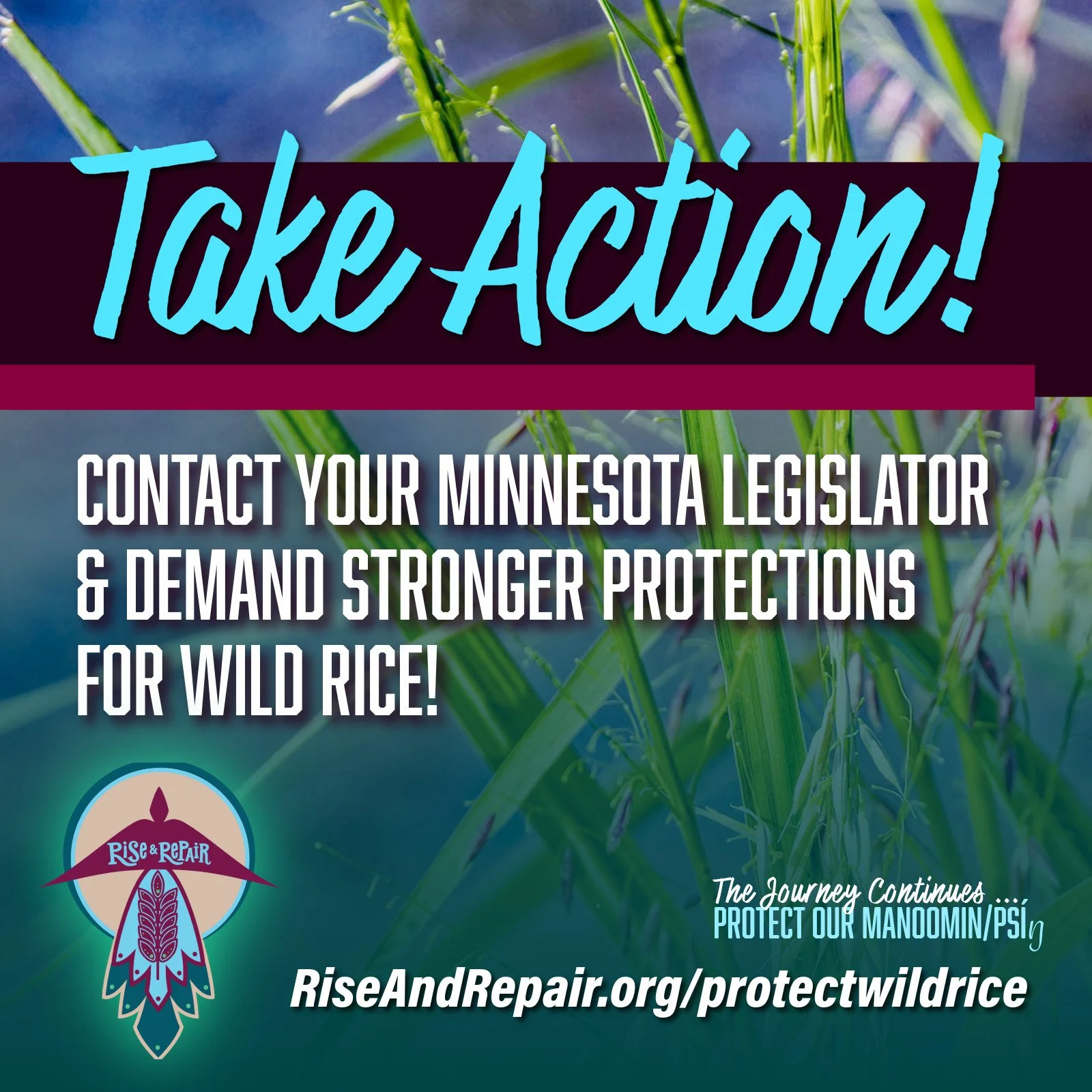
For Individuals ~ Take Action!
Contact your legislators and ask them to support increased protections for Wild Rice.
Notable Letters of Support & Resolutions
National Congress of American Indians (NCAI) Fall 2025 Resolution Supporting the Inherent Right of Manoomin/Psíŋ: Click to View
Minnesota Indian Affairs Council (MIAC) Letter of Support for Wild Rice Protections: Click to View
Minnesota Indian Affairs Council (MIAC) Resolution Recognizing the Inherent Right of Manoomin/Psíŋ: Click to View
Organizational Sign-On Letter (Updated 3/9/26): Click to View
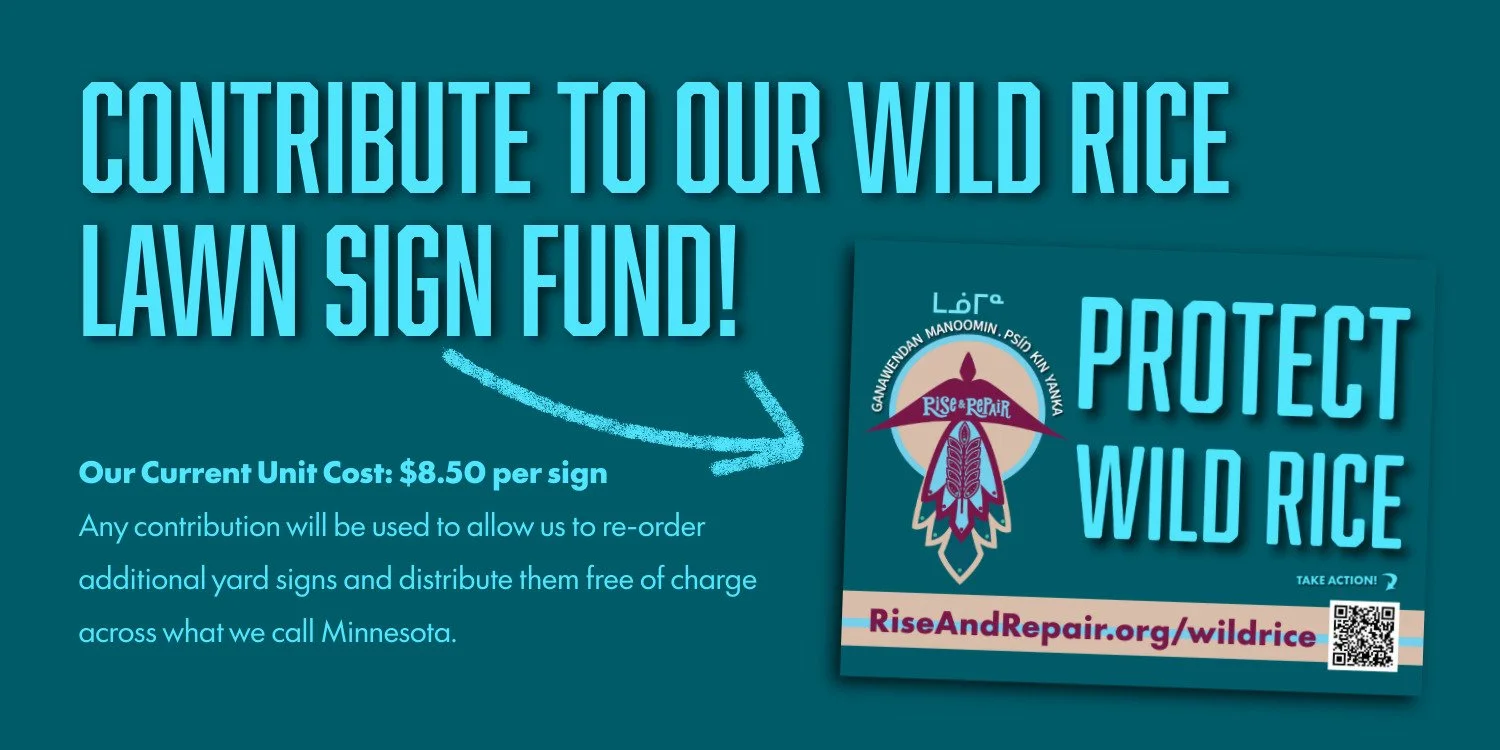
For Businesses, Organizations & Community Groups
Does your group support the need to protect the natural stands of uncultivated wild rice? Add your name to our organizational sign-on letter!
Get Involved!
Click below to get involved with the campaign to protect Manoomin/Psíŋ!
State Protections for Wild Rice in Wisconsin, Michigan, and Minnesota:
Learning from one another in the Great Lakes Region
Wisconsin, Michigan, and Minnesota provide state-level protections for wild rice, although the scope and mechanisms of protection differ. Wisconsin recognizes wild rice through harvesting regulations and limited habitat protections, particularly in designated wild rice waters and wetlands.
Michigan, where wild rice is classified as a threatened species, provides broader protections under its endangered species laws, prohibiting the taking, possessing, or destruction of wild rice.
Both Wisconsin and Michigan have statewide stewardship projects to help protect and restore wild rice. Minnesota has a unique water quality standard that is set to protect wild rice from sulfate pollution, which is set at 10mg/L. In 2025, Minnesota will finally begin to enforce this standard.
Minnesota also has harvesting regulations and some habitat protections. All of these states are home to the majority of the wild rice in the United States. Working together and learning from one another's protections in this moment can help us ensure this plant remains for the next generations.
