
Ninga izhichige nibi onji!
“I will do it for the water!”
~ Anishinaabe Water Prayer ~
Talon Mine Public Comment Period is now open until September 14th at 4:30pm CT: Ensure your voice is heard!
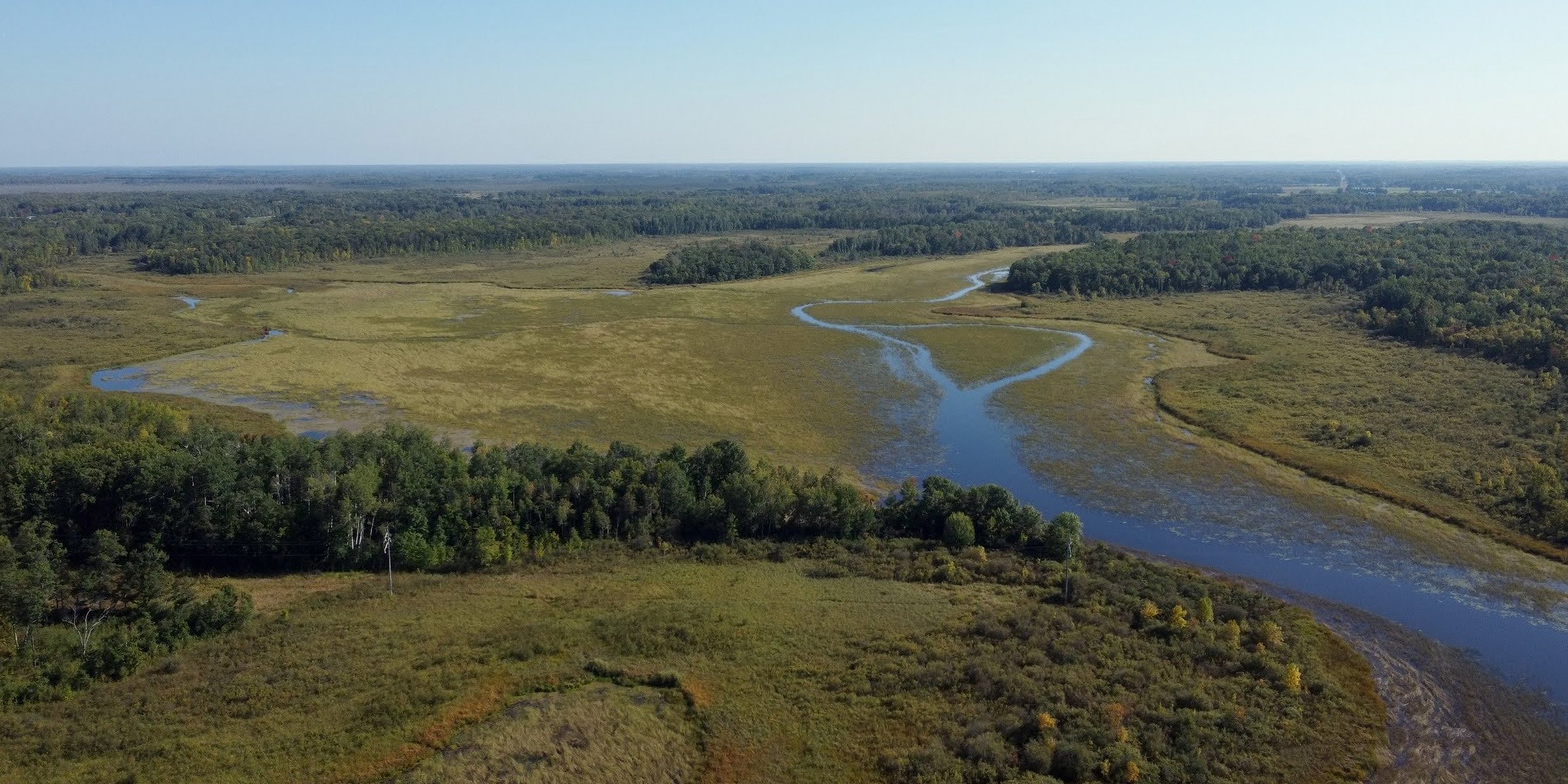
Background Photo Credit: Wldfwr Grp–-Flowage Lake, which holds abundant wild rice as seen in this photo, is about 10 miles away from the proposed Talon mine site
“The time is now to stand together and protect our waters and wild rice from the dangers of copper-nickel sulfide mining! Why would we risk manoomin-rich areas and clean waters for profit? The Mississippi River provides drinking water to millions of people–it cannot become a sacrifice zone! Now is the time to ensure your voice is heard!”
~ Leanna Goose, Organizer with the Rise & Repair Alliance
Choose Water Over Nickel ~ WaterOverNickel.com
Water Over Nickel is an initiative by the Mille Lacs Band of Ojibwe and allied organizations to protect Minnesota’s people, natural resources, and cultural sites from the negative impact of nickel mining.
View the Website | View the Facebook Page | View on LinkedIn | Follow on Instagram
About the Tamarack Mine DNR Comment Period:
Commenting open: July 14, 2026 12:00PM CT - September 14, 2026 04:30PM CT.
Minnesota’s DNR has opened up comments on the “Scoping Environmental Assessment Worksheet (SEAW)” and “Draft Scoping Decision Document (DSDD)” for the proposed Tamarack Mining Project. The purpose of public comments on this docket is to determine the SCOPE of what should be included when the Department of Natural Resources conducts its Environmental Impact Statement (EIS).
“The EIS is not a decision-making document and does not determine whether the Project moves forward. Rather, it is an information-gathering document used to inform decision-makers, including those considering land use applications and environmental permits required for the Project”
Resources from several organizations are available below to help you craft a meaningful comment at this stage of the regulatory proceeding!
Resources & Click-To-Fill Action Alerts from Partner Organizations
Minnesota Center for Environment Advocacy (MCEA): “Tell DNR to protect water and wild rice from Talon pollution”
Water Legacy: Talons Off! Talon Mine Comment Period & Information Page
Tamarack Water Alliance: Talon Tamarack EIS Scoping Comments Info Page
WaterOverNickel.com: Share Your Voice: Public Comment Resources
Beyond the BWCA: Sulfide Mining’s Looming Threat to MN
Webinar from the Minnesota Center for Environmental Advocacy, Friends of the Mississippi River and WaterOverNickel.com
Submitting a Comment
Online Comment Portal:
Link: https://mndnr.commentinput.com/?id=6eAPuQKx2b
Comment by US Mail:
Tamarack EAW Project Manager, Environmental Review Unit
Ecological and Water Resources Division, DNR
500 Lafayette Road St. Paul, MN 55155-4025
In-Person Comment Meetings
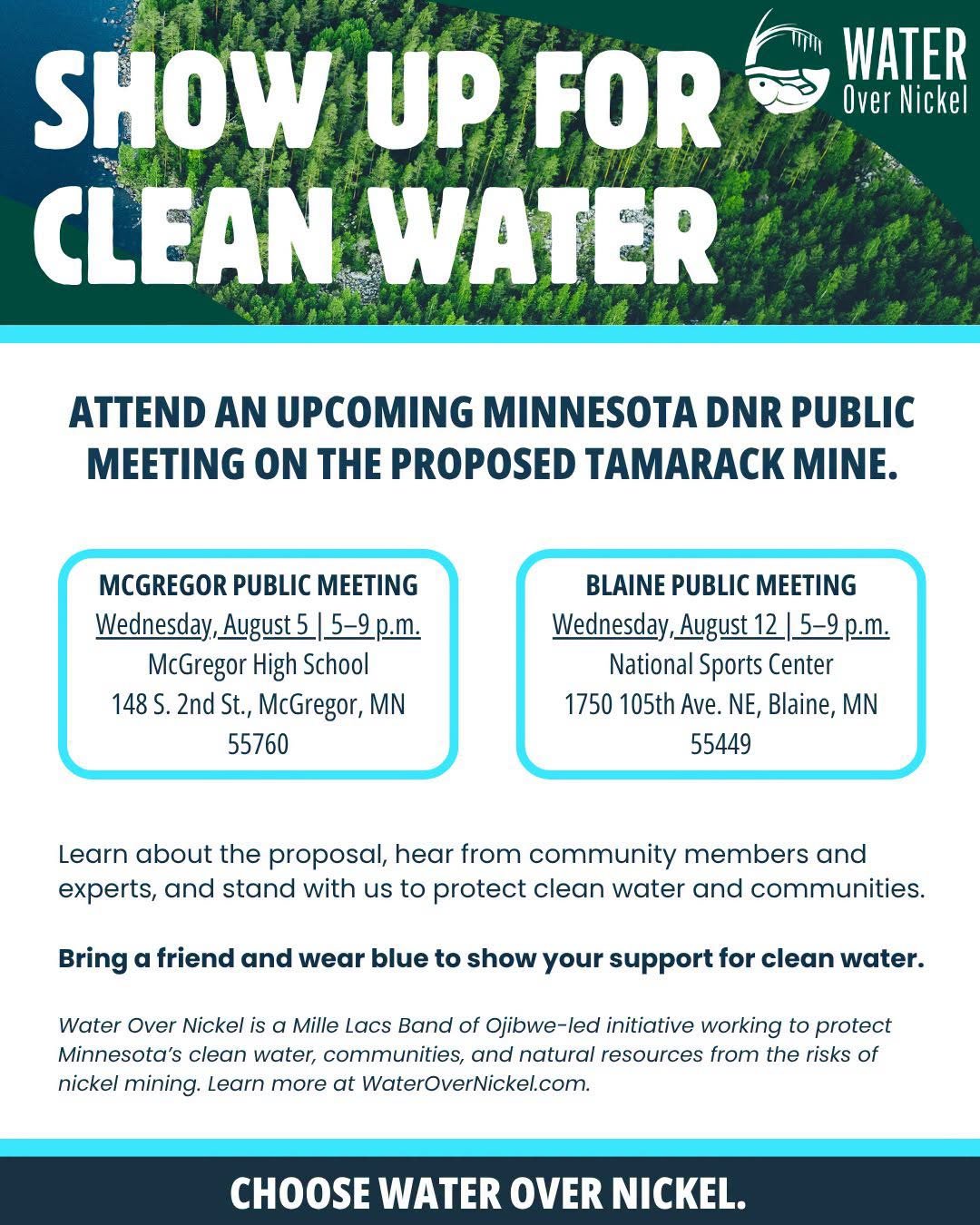
Wednesday, Aug. 5 | 5–9 p.m.
McGregor High School
148 S. 2nd St., McGregor
Wednesday, Aug. 12 | 5–9 p.m.
National Sports Center
1750 105th Ave. NE, Blaine
Comments can be submitted to the Minnesota Department of Natural Resource Online or by Mail. There are also several in-person public comment events being organized by the DNR!
Draft Public Comment to Copy/Paste!
I urge the Minnesota Department of Natural Resources (DNR) to protect treaty rights and the waters of all Minnesotans from the risks of proposed copper-nickel sulfide mining!
Treaty-reserved rights are the supreme law of the land:
This proposed mine should not even be considered because of the threats it poses to treaty-reserved rights and the waters that support life in our state. This proposed mine is just 1.3 miles from Anishinaabeg homes and is located directly in the Mississippi River Watershed and within treaty territory.
DNR decisions should include a mechanism that determines whether a risk is too grave to even consider. For example, if this project has the potential to violate treaty-reserved rights to hunt, fish, and gather, a DNR internal mechanism should be created to reject the project for the threats it poses.
Protection of treaty rights means protections for everyone’s rights to clean water, lands, and air. The reservations are the forever homes of tribal nations in Minnesota, and the treaty territories are places where the Anishinaabeg still hold the treaty-reserved and inherent rights to hunt, fish, and gather; they cannot become potential sacrifice zones!
Under Article VI of the United States Constitution, treaties are the supreme law of the land! Meaning corporate profits cannot be put above tribal nations' inherent and legally protected connections to the lands and waters in these areas. Tribal Nations harvest manoomin (wild rice), medicinal plants, fish, deer, berries, and maple syrup in these areas. These relationships with the land and waters are legally protected, and the state of Minnesota and the DNR must consider these treaty-reserved rights above all else as legally required by the Constitution!
National Congress of American Indians Resolution #SEA-25-009 Requiring Free Prior and Informed Consent by Corporations, Companies, State and Federal Government Agencies Across the United States, and Globally:
This resolution from the National Congress of American Indians requires Free, Prior and Informed Consent by Corporations, Companies, State and Federal Government Agencies Across the United States and globally. Free, Prior and Informed Consent (FPIC) is an international human rights standard that affirms the inherent sovereignty and self-determination of Indigenous Peoples, ensuring that no action affecting their lands, territories, resources, cultures or livelihoods proceeds without their freely given consent. Tribal Nations retain the inherent right to self-governance, control over their lands, resources, and cultural heritage, and the ability to make decisions that impact their homelands and treaty territories where Indigenous Peoples maintain the right to hunt, fish, and gather.
FPIC affirms that Tribal Nations retain the right to determine their development priorities and exercise self-determination in accordance with their cultural, social, economic, and political systems, in accordance with the United Nations Declaration on the Rights of Indigenous Peoples (UNDRIP). The principle of FPIC is supported by the United Nations and is affirmed in the UNDRIP as well as recognized by the international community as the minimum standard for survival, dignity, and well-being of Indigenous Peoples worldwide, for which the United States has formally expressed support.
FPIC requires that consent must be given voluntarily, without coercion, intimidation, or manipulation, and consent must be sought and at the earliest contemplation of a project, before any decision or action is taken and throughout the lifespan of the project when such action that may impact the rights, lands, resources, or livelihoods of Indigenous Peoples, and such consent must be based on accurate and accessible information provided in a language and format that is understandable and culturally appropriate to the intended audience with the consent being explicit, specific, and documented, reflecting the genuine agreement of the affected Indigenous Peoples, taking into account that such consent can be revoked at any time.
FPIC must be sought when a project, such as a proposed mine, is located on, off, or near a reservation, Tribally-owned or controlled lands, ancestral homelands, and lands where Tribal treaty and statutory rights exist, but is close enough to contaminate a Tribal Nation's water supply, watershed, or resources in its treaty territory, allowing Tribal Nations to maintain the chemical, physical, and biological integrity of their waters and resources.
I call on the state of Minnesota to follow the process of Free, Prior, and Informed Consent that is laid out by the United Nations Declaration on the Rights of Indigenous Peoples and the National Congress of American Indians to respect tribal sovereignty and treaty rights. 97% of the Nickel in the United States lies underneath reservations or within 35 miles of one; Minnesota has the unique opportunity to lay out a pathway that is truly respectful of the rights of Indigenous peoples!
NCAI Resolution Requiring Free Prior and Informed Consent
The Mississippi River provides drinking water to millions of people downstream:
This proposed mine is located directly in the Mississippi River Watershed, which provides drinking water to millions of people downstream! Copper-nickel sulfide mining in this area poses a dangerous threat to the water that brings life to millions of people. How could this project impact the drinking water of millions of people downstream? One leak, one failed containment, and this proposed mine could have devastating consequences for everyone downstream. The Mississippi River is already impaired in areas across our state. When polluting projects are permitted, it is usually not a matter of if something will go wrong but when. Studying the risks and cumulative impacts to our nation's water supply is a must. If the risks are too great, then again there should be a decision-making process that puts the lives of millions of people who depend on this river ahead of any corporate profits.
A train derailment could have devastating consequences:
This project proposes to transport hazardous materials by train. Train derailments are not hypothetical; they happen, and have happened repeatedly in the state of Minnesota. (MNDOT) Toxic waste transported by train across the state for the life of this mine is a dangerous threat to human health, treaty-reserved rights, and water in our state. What happens if a train derails near a wild rice water? This must be studied across both routes. This project plan poses an unacceptable risk to treaty-reserved rights in this area!
The full scope of the project must be included in the EIS:
This proposed plan currently only includes a small portion of the area Talon currently holds mineral rights to. We ask that the DNR include all mineral lease areas that Talon currently holds to ensure the full scope and full impact of this potential project are reviewed and understood!
MN’s sulfate standard:
The sulfate standard has existed since 1973 and is set to protect wild rice. Decades of scientific research have shown that sulfate in waters leads to toxic sulfide, which harms the growth of wild rice. Excess sulfate in waters also leads to methylmercury contamination in fish, which is dangerous to human health. Existing mining operations have already demonstrated the difficulty of meeting sulfate limits. Sulfuric acid that is created from copper-nickel sulfide mining poses a grave risk to treaty-protected foods like wild rice and fish, as well as the rights of all Minnesotans to clean waters! The waters in this area are very low in sulfate. This area cannot become a science experiment for the benefit of corporations. Treaty reserved rights come before corporate profits!
The amount of water that could be wasted over the life of this mine is unacceptable:
The proposed project's plan to withdraw up to 2.3 million gallons of groundwater every day it is in operation and pump it to the surface threatens the treaty-reserved rights of tribal nations, as wild rice is very sensitive to changes in water levels. Pulling millions of gallons of water from the ground during the life of this project could change the hydrology of areas where abundant manoomin grows!
Groundwater is also not an infinite resource. Aquifers are recharged by rainwater; what happens when the rains are few and far between, as we have seen this summer? What happens when billions of gallons of water are pumped from the ground in the years of this mining project if there is no rain to recharge aquifers? The risks this project poses to water and wild rice need to be understood. And again, a mechanism needs to be in place to ensure that wild rice, treaty-reserved rights, people's groundwater, and drinking water are protected, not corporate profits.
Electronic waste recycling is a smarter alternative to protect our shared waters:
“Recycling could cut demand for new mining by 25–40% by 2050, and recycled minerals produce about 80% fewer greenhouse gas emissions than newly mined materials.” (International Energy Agency Reports 2024, 2025) “The U.S. currently generates about 46 pounds of e-waste per capita annually of which only around a quarter gets recycled. Massive amounts of metals are making their way into landfills.” (The Economic Potential of Electronic Waste Recycling) We call on the state of Minnesota to lead the way in sourcing metals responsibly by moving toward 100% electronic waste recycling. The National Congress of American Indians supports electronic waste recycling as an alternative to reduce mining and safeguard Indigenous lands across the United States. We ask that the DNR study and include electronic waste recycling as an alternative to mining within their project plans, as it is a responsible way to source metals!
NCAI Resolution SEA-24-008: Leveraging Tribal Support for Electronic Waste Recycling to Reduce Mining and to Safeguard Indigenous Lands Across the United States
Clean Water supports a healthy economy:
The fishing and tourism industry is a main driver of Minnesota’s economy! Clean water supports a healthy economy, according to Explore Minnesota: Visitor spending generated a total economic impact of $24.7 billion, including $2.4 billion in state and local tax revenues and 182,435 jobs supported by the tourism industry. (Explore MN) Protecting our waters means protecting jobs that can sustain our state into the future! The health of our environment and economy must be studied in any future permitting decisions. And again, a mechanism must be put in place to protect the health of our environment and, in turn, the economy over corporate profits!
Protecting public waters comes before corporate profits:
Minnesota’s waters belong to all Minnesotans and the DNR has a responsibility to prevent foreseeable harm before it occurs. “Public waters are held in trust by the state for the benefit of all Minnesotans. As such, the DNR is charged under state law with regulating activities within public waters, to ensure the public’s collective interest in those waters is protected.” (MNDNR) This proposed mine mainly benefits corporations and the world’s first trillionaire, not the public!
For all the reasons stated above, we ask that the DNR choose to protect treaty-reserved rights and the rights of all Minnesotans to clean water!
PDF’s can be submitted alongside public comments; here are some resolutions from the National Congress of American Indians that can be included along with your comment:
NCAI Resolution #SEA-25-008: “Leveraging Tribal Support for Electronic Waste Recycling to Reduce Mining and to Safeguard Indigenous Lands Across the United States”
PDF Files to Upload with Your Public Comment
PDF’s can be submitted alongside public comments; here are some resolutions from the National Congress of American Indians that can be included along with your comment: